Why Women Gain Weight During Menopause — And How Dieting Often Makes It Worse…
"I'm not even overeating, but my belly just keeps getting bigger…"

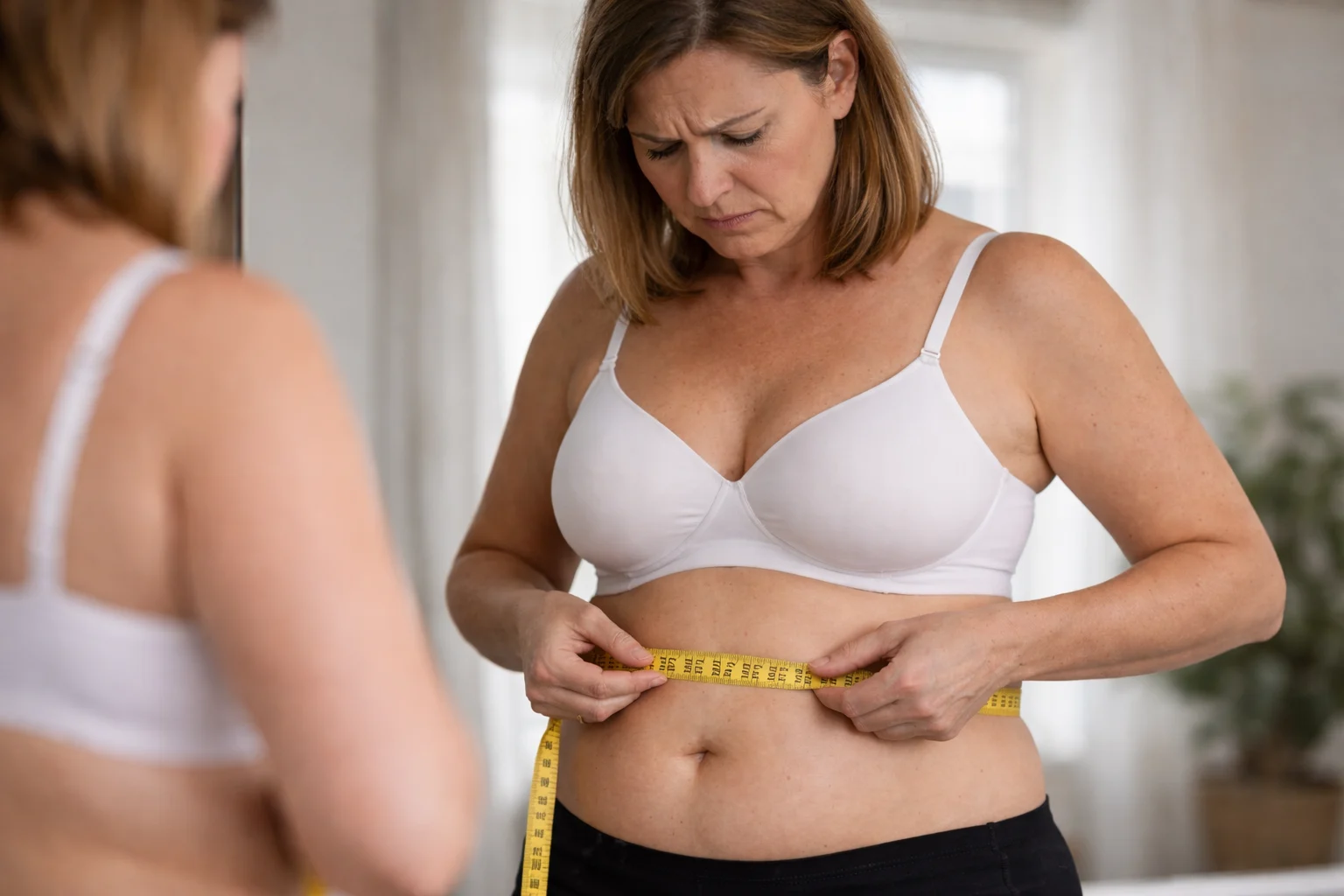
In my practice, I keep seeing the same pattern:
Women barely change their lifestyle, and yet their body changes anyway…
During menopause, the balance between estrogen and progesterone shifts, and that shift causes gradual, creeping changes.
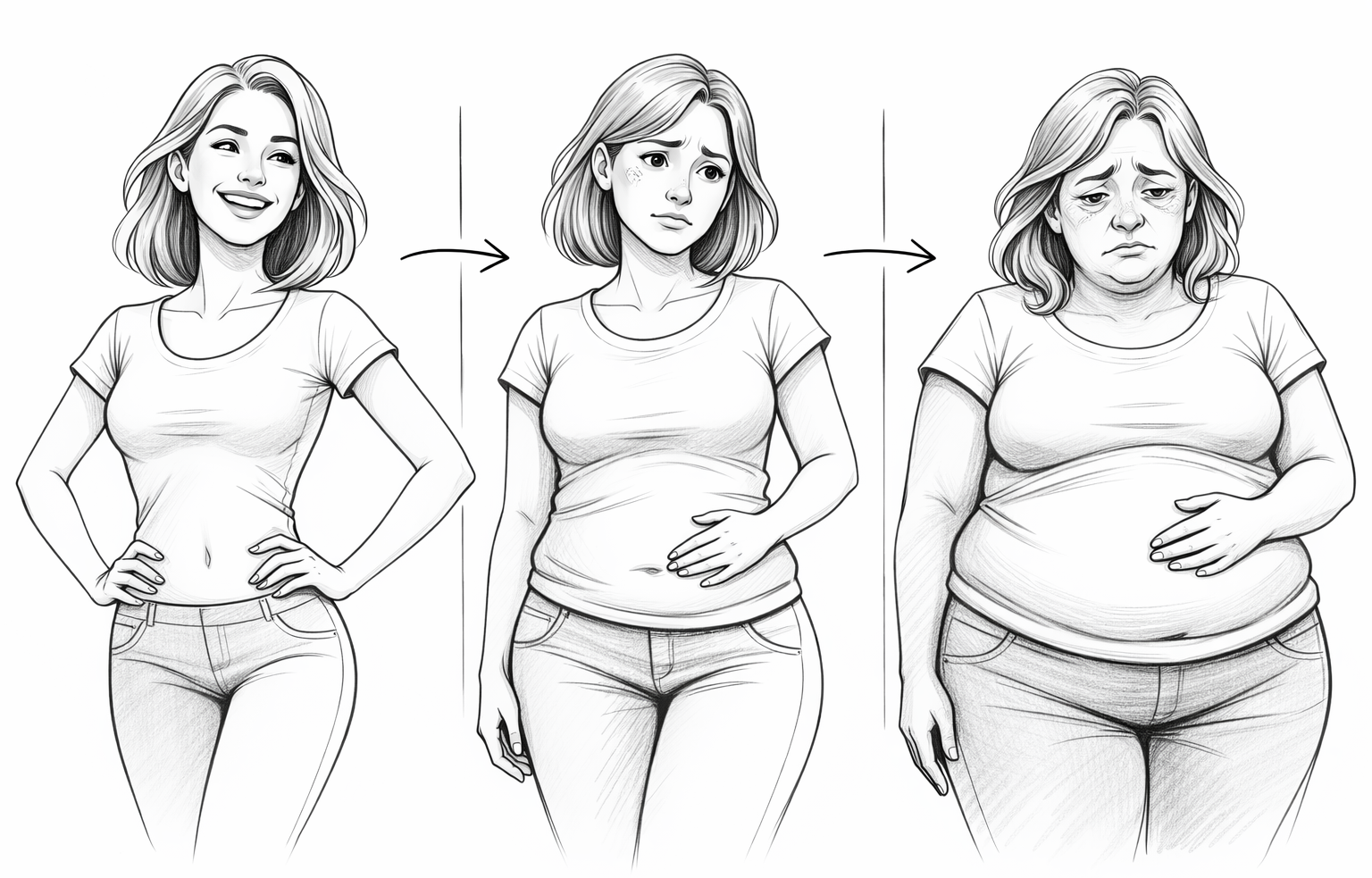
Here are 6 reasons why weight gain during menopause is so common, and what doctors are recommending in 2026.
START LOSING WEIGHT TODAY1. Your Fat Distribution Changes
When estrogen drops, it changes the way your body stores fat.
Before menopause, fat is more commonly stored around the hips and thighs (subcutaneous fat).
After menopause, this shifts to visceral fat: fat around the abdominal organs.
This type of fat is:
- More hormonally driven
- More sensitive to stress
- More resistant to calorie restriction
That's why many women literally feel their "shape" changing, and why dieting has little effect…

2. Your Metabolism Slows Down
Estrogen also plays a key role in your energy expenditure.
When estrogen drops:
- Muscle mass decreases faster
- Your resting metabolic rate drops
- Your body becomes more efficient at storing energy
Put simply:
You burn fewer calories than before — even if you eat exactly the same and exercise the same amount.
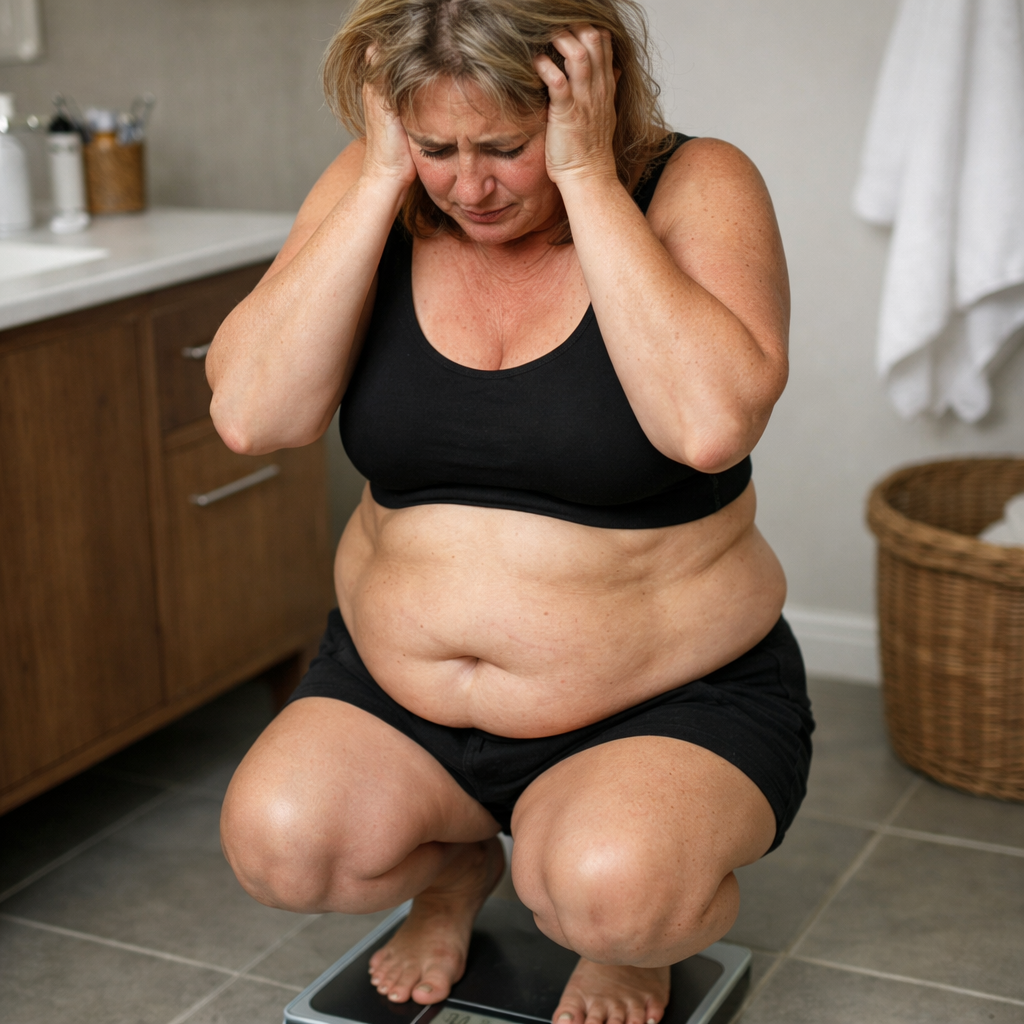
3. Poor Sleep Raises Cortisol and Slows Fat Burning
During menopause, many women deal with hot flashes, waking up at night, and restless sleep. That might seem harmless, but sleep deprivation raises cortisol.
Elevated cortisol stimulates fat storage around the belly, disrupts blood sugar, and slows fat burning. At the same time, your hunger hormones go out of balance: leptin (the satiety hormone) drops and ghrelin (the hunger hormone) rises.

4. Your Blood Sugar Becomes Less Stable
As estrogen drops, insulin sensitivity decreases.
This means:
- Faster blood sugar spikes
- Faster energy crashes
- More cravings for quick carbs
Every spike triggers fat storage, every crash increases cravings.
This creates a cycle that's incredibly hard to break.

5. Muscle Mass Declines (And That Lowers Your Metabolism)
From your 40s onward, you lose an average of 3–8% muscle mass per decade.
Muscle tissue is metabolically active.
Less muscle = lower resting metabolism.
Even if your eating habits stay exactly the same, your body burns less energy than it did 10 years ago.
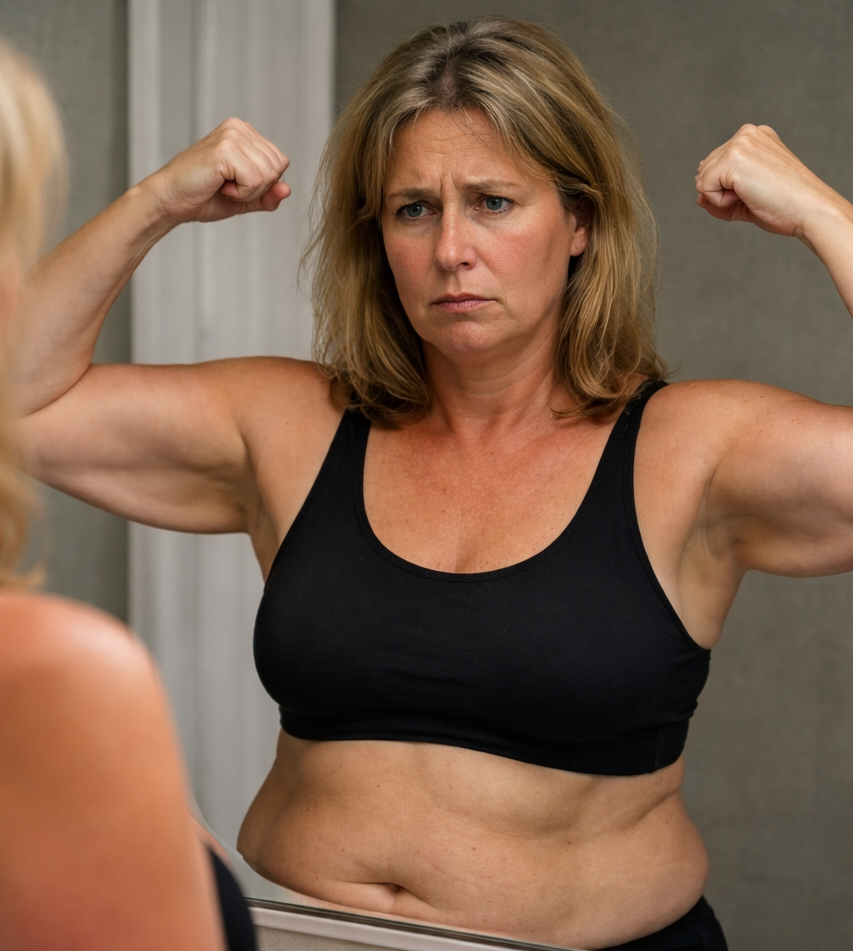
6. Strict Dieting Increases Stress in Your System
When you drastically cut calories:
- Cortisol rises
- Your resting metabolism drops
- Fat storage efficiency increases
Your body interprets this as "scarcity."
And in scarcity mode, it holds onto fat.
That's why many women find that eating less doesn't lead to a flatter belly, but to more frustration…

What Doctors Are Now Recommending Instead
Instead of stricter diets, the focus is shifting to:
- Supporting estrogen balance
- Regulating cortisol
- Improving sleep quality
When these systems calm down, you often see:
- ✨ Less belly fat
- ✨ Less bloating
- ✨ Better sleep
- ✨ Fewer hot flashes
- ✨ Fewer cravings
- ✨ More energy
Not because you're fighting harder, but because your body is finally working with you again.

The Menopause Capsules by MenoEase were developed to support your body exactly where the change begins: your hormones.
Instead of a crash diet or extreme approach, they target stress regulation, sleep, and metabolism — exactly the systems that become unbalanced during menopause.
For many women, it feels like the moment their body finally starts working with them again, instead of against them.
START TODAY →It Really Works — See for Yourself


Frequently Asked Questions

Copyright 2026 MenoEase
*These statements have not been evaluated by the FDA, TGA, MHRA, or Health Canada. This product is not intended to diagnose, treat, cure, or prevent any disease. Individual results may vary. Consult your healthcare provider before starting any supplement program. MenoEase is a dietary supplement — not a medicine.